Can you hand a riad to a concierge without letting it?
Yes. Our owner’s concierge service is contracted on its own, with no listing and no guests, for a riad you keep for yourself, lend to family and friends or leave closed for part of the year. It covers what a riad needs even when empty: a weekly visit to open up, ventilate, run the taps and take photographs, a full technical check every month, the basin and the patio plants, the craftsmen when a surface needs them, and getting the house ready before each of your stays. A closed riad doesn’t stop ageing: it ages without a witness, and it’s the damp patch spotted early that makes the difference between patching the plaster and a building project. If you decide to let it later, the riad moves into property management with the same team, and the condition report drawn up when we take it on serves as the reference for both.
Read our article on looking after an empty riad
How do your guests arrive at a riad in the medina?
With someone beside them, from the taxi to the door. A riad has no address a driver can find alone: it has a derb, a landmark and someone waiting at the end of it. Your guests receive a meeting point that any taxi knows, we wait for them there, and their luggage is carried for the last few metres, however narrow the lane. A late-night arrival is prepared like any other, because a sleeping medina is bewildering to a traveller who sees it for the first time. Inside the riad, we show what a listing can’t explain: the door and its keys, the hot water, the roof terrace, what is and isn’t done with regard to the neighbours. A failed arrival becomes the first line of a review, and a lukewarm review weighs on the rating for months. That’s why we treat arrivals as part of management, not as an extra service on top.
How do you choose the craftsmen who work on a riad?
On what they have already done, not on what they promise. A tadelakt maâlem, a zellige setter, a joiner or a waterproofing specialist is judged by repairs a few years old: plaster that has lasted three winters says more than a well-presented quote. We work with vetted craftsmen, and a partner who disappoints once comes off the list. Every job follows the same rule: the diagnosis and its photograph first, then the quote, then the work. Below the spending limit agreed in the mandate, we commission the repair and it appears in the report with its invoice; above it, nothing starts without your agreement. We follow the work through to the end, because a craftsman without a witness ends up choosing the quickest product. If you already have a craftsman you trust, they can stay: we supervise them, with a written brief, like the rest of the team.
Read our article on renovating a riad from abroad
Who deals with the neighbours of a riad while you’re away?
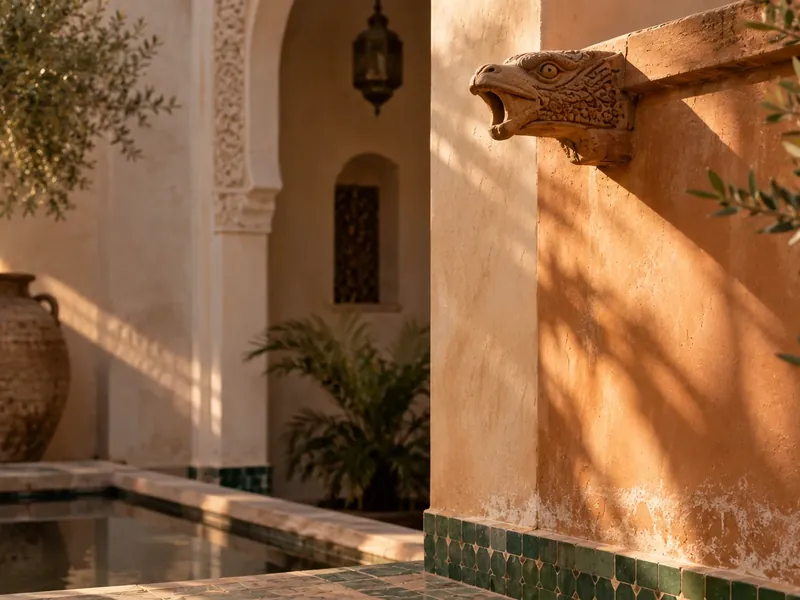
We do, and it’s a part of the work that is easily underestimated. A riad shares its walls, its roof terrace meets the neighbour’s, and the same rainfall can leave a stain on one side and a blocked gargoyle on the other. When a neighbour reports a leak, a noise or a door left open, they find someone with us who answers, comes over and sees for themselves, rather than a phone number abroad. We establish where the problem comes from before discussing who repairs it, with photographs, and we report every exchange to you. When the riad is let, good relations are also protected in advance: we turn down stays that are looking for a party house, because one noisy night in a derb is paid for in complaints for months. A riad on good terms with its neighbours is a riad people warn when something is wrong.
What should you prepare before handing your riad to a concierge?
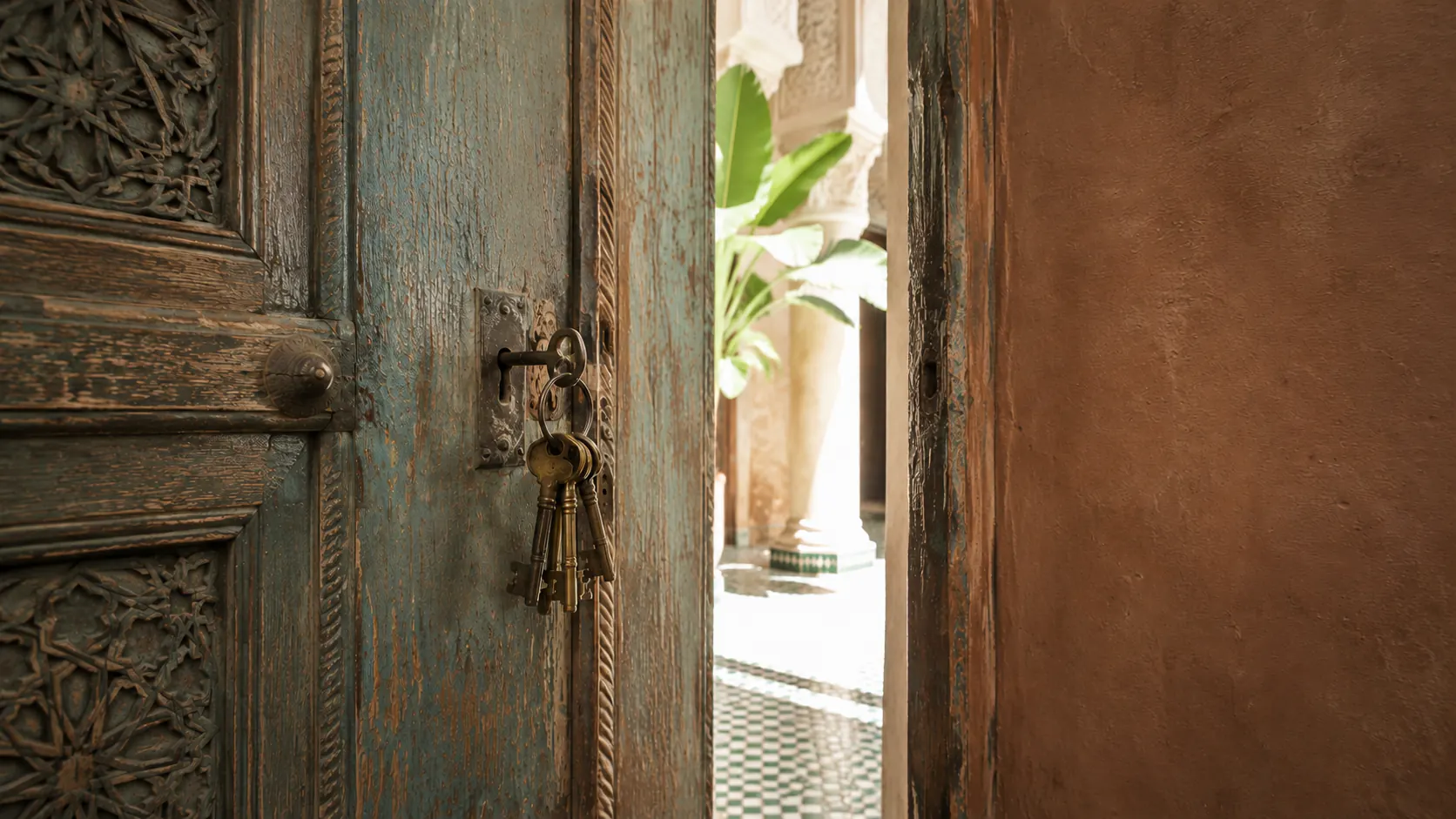
The keys, the paperwork and the riad’s memory. The keys first: every set, including those sitting with a neighbour or a former caretaker, because you can only watch a door properly when you know every key to it. The paperwork next: title deed, water and electricity contracts, insurance, staff contracts if there are any and, if the riad is let, its declarations. The memory last, which is most often missing: the work already done, the craftsmen who did it, old leaks, where the stopcocks and the meters are. None of this is a condition for our visit: we make it either way, and what is missing can be pieced together. But a riad whose history is known is easier to look after, and the condition report drawn up that day becomes the reference for saying what has changed, and since when.
Read our article on handing your keys to a concierge