Concierge services in Marrakech. On the owner’s side.

You own a villa or a riad in Marrakech, and you do not live in it. We hold the house, the stays and the accounts.

What does a concierge company in Marrakech actually do?

A concierge company in Marrakech is the firm that holds your property when you are not there: it lets the house, welcomes your guests, maintains it, watches over it and reports back to you. You keep the ownership, the decisions and the income.

The word covers four trades the market tends to blur — rental management, technical maintenance, oversight of an empty property, and guest reception. A villa in the Palmeraie and a riad in the medina do not need them in the same proportion: one lives on its pool and its garden, the other on its tadelakt and its craftsmen.

We hold all four, with one team and one named contact. Not for the sake of completeness — because a property passed between three providers loses a little of its rating at every handover, and a rating is paid for in occupancy.

A five-star review is not an accident

it is the result of a hundred small decisions made right

Delegate or self-manage

Why hand your villa to a concierge company rather than manage it yourself?

In Marrakech, the gap between a property that is merely let and one that performs rarely comes down to the property itself. It comes down to what happens around it, on the days the owner is not there.

01

Who opens the door when you are 3,000 km away?

Nobody, unless the answer has been organised in advance. It is the first thing an absent owner discovers: a property cannot be held from a phone. A leak has to be seen, a lock has to be changed, a meter has to be read, an arrival has to be met — all of it requires somebody inside the house, the same day.

The most common arrangement leaves a single set of keys with a single person. It holds as long as nothing unusual happens, and stops holding the day two things happen at once. With us, keys are inventoried, at least two people know each property, and every entry leaves a written trace.

It is not a question of trust but of availability: the most devoted person in the world cannot be at their own job and at your house at three in the afternoon on a Tuesday. An organisation can.

02

What becomes of a villa left with nobody on site?

It declines slowly, then all at once. Medina damp, dust, limescale and sun work on an empty property faster than on a lived-in one: tadelakt joints, pool pumps, air conditioning, pipework. Nothing dramatic for six months, then a repair that would have cost three times less six months earlier.

On the letting side, the same mechanism runs faster. A rushed clean, a message left unanswered on a Sunday, a technical fault left as it is: one stay is enough to bring a rating down, and a rating takes a season to climb back. Our work consists of preventing both.

The arithmetic always runs the same way: a regular visit costs less than a pool pump, a pool pump costs less than a season without lettings, and a season without lettings costs less than a reputation that has to be rebuilt.

03

Can a network of craftsmen be built from abroad?

Barely, and it is often what decides the outcome. A plumber available on a Friday afternoon, a craftsman who can rework tadelakt without staining it, a housekeeping team able to turn two stays around in one day: in Marrakech, those answers come from a contact book, never from a search engine.

That book cannot be bought; it is proven on real jobs. Over seventeen years we have tested our partners far more often than we have recruited them — and a provider who disappoints once comes off the list. It is precisely what a remote owner cannot build alone.

The owner who manages alone ends up paying for the network they do not have: the craftsman found in a hurry, the call-out billed twice, the botched job done again. Those are lines that appear in no comparison of commission rates.

Scope

What do our concierge services
in Marrakech cover?

Six areas, one team. They apply to a villa as much as to a riad, whether the property is let all year or used by its owners for a few weeks.

Bedroom of a prestige villa in Marrakech prepared for letting

Letting

Who handles the listings and the calendar?

We do. Letting a property starts with a listing that stands comparison: photography reshot, copy written to convert, equipment described without approximation, published on Airbnb, on Booking and on Vrbo at the same time.

Pricing comes next. A single year-round rate is the surest way to lose money twice: too low in February, too high when the city empties. We follow demand week by week, school holidays and conferences included.

Calendars stay synchronised across platforms, enquiries are qualified before they are accepted, and your own weeks are blocked whenever you want them.

A listing is never finished: we rework it after each run of reviews, when a piece of equipment changes, or when direct competitors move. The monthly report tells you what was changed, what it was changed for, and what the change produced.

Courtyard of a Marrakech riad prepared ahead of an arrival

Stays

Who welcomes your guests and answers during the stay?

A member of the team, in person, whatever time they arrive. They walk the property, explain the equipment, record its condition and leave their direct number.

During the stay, your guests have one contact reachable seven days a week, who handles requests and incidents without going through you. The services they ask for — a table, a transfer, a guide — are arranged by us and paid for by them.

On departure, the property is inspected straight away, the online review is requested at the right moment, and every comment receives a public reply.

That last step is the one that weighs most on your rating, and it is the one owners who manage alone abandon first, for lack of time or of distance. A lukewarm comment nobody answers costs more than an incident that was dealt with.

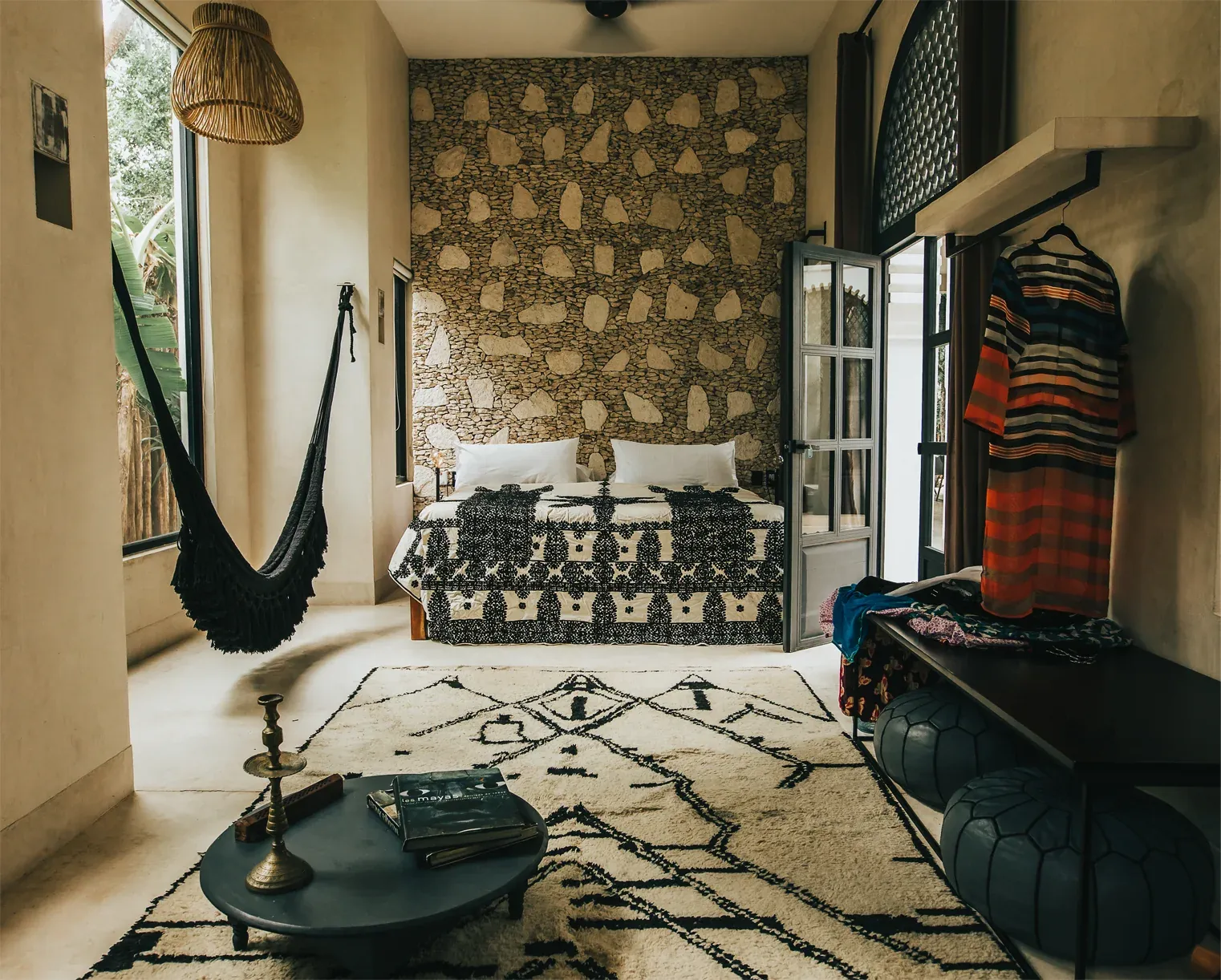
Household linen and a leather pouffe in a well-kept riad bedroom

Housekeeping

How are housekeeping and linen checked?

By an inspection after every clean, carried out by someone other than the person who cleaned. It is the only method that holds: a clean is judged on what was missed, not on the hours spent.

Linen goes to the laundry and comes back counted, consumables are restocked before the next arrival, and the pool is treated between stays. Anything missing or broken is photographed the same day.

On tight turnarounds — a departure in the morning, an arrival in the afternoon — the team is doubled rather than rushed.

The teams are the same from one week to the next: they know the house, know where things are kept and notice what has moved. That is what separates a property that has been cleaned from a property that is kept, and no cleaning firm sent at random can offer it.

Craftsman at work in the medina of Marrakech

Maintenance

Who steps in when something breaks?

Our craftsmen, under our coordination, without you having to work out who to call from abroad. Air conditioning, plumbing, electrics, pumps and water tank, locks and joinery: every trade has its own proven contact, tested on the properties we already run.

Most of it is settled before the breakdown. Regular inspections — filters, pressure, leaks, distribution board — cost a fraction of an emergency repair in August.

A spending limit agreed in the mandate frames what we commit to without calling you. Above it, you receive a quotation before anything starts.

Older medina properties also call for skills that are not found everywhere — tadelakt, zellige, painted joinery, carved plaster. We work with the craftsmen who hold them, and we turn down repairs that damage the material for the sake of going faster or shaving a few hundred dirhams.

Garden and pool of a Marrakech villa maintained between lettings

Empty property

What happens to the property between lettings?

It keeps being visited. An empty property does not stop ageing: the garden grows, the pool loads up, pipework dries out, and medina damp works on the walls.

Oversight of an unoccupied villa or riad follows a rhythm agreed in advance: a visit, airing, running the installations, meter readings, checks on access and on the caretaker. Every visit produces a dated photo report.

It is the least discussed part of the trade and the one that protects the most: it decides the condition in which your property comes through the summer and the quiet season.

This mission is contracted on its own, with no letting attached. Several owners entrust us with it first, while they decide whether to let, to sell, or simply to keep the house in order for themselves and their family.

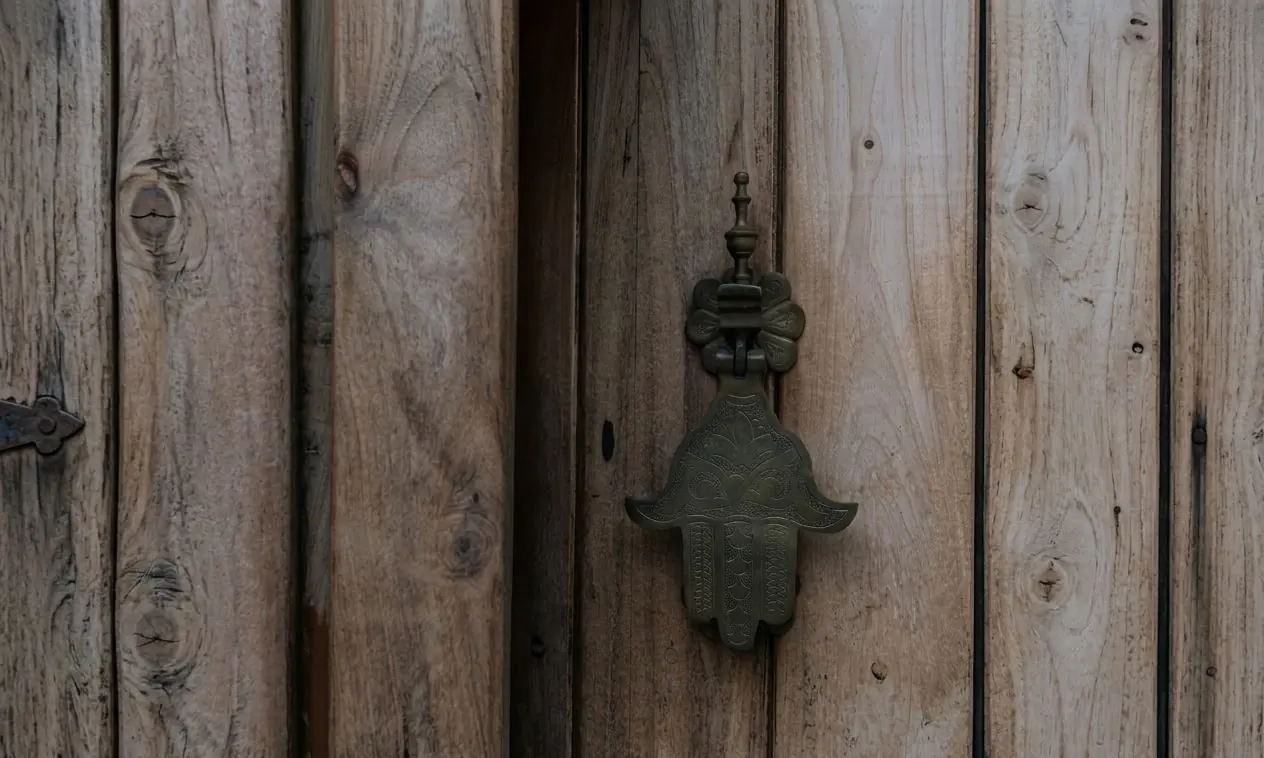
Moroccan riad door with its hand-of-Fatima knocker

Accounts

How do you track the income and the costs of the property?

Through a single monthly report: income collected, occupancy rate, costs committed, work carried out, reviews received. One page, the same headings month after month, so that comparison is possible.

Running costs — water, electricity, internet — are settled on your behalf from a float, with every receipt attached to the report. Payment of your income follows a fixed schedule.

Your documents remain usable by your accountant, in France as in Morocco. No movement appears without its supporting document.

What you do with them is your business: some owners pass the report straight to their accountant, others use it to weigh letting against personal use or resale. We do not advise on Moroccan tax — we supply, every month, the accounting documents that make it possible to deal with.

See the two management packages in detail

Taking over

How does taking over a property work, step by step?

From the first visit to the first monthly report, five steps and no grey areas.

The Villas Ambar team at their office in the medina of Marrakech
  1. 1

    What happens at the first visit?

    We come and see the property, with you or with whoever holds the keys. We record its condition, its equipment, what it lacks in order to be let and what will require work. You then receive a written answer within 48 hours: what we would take on, under which package, and what we would advise against doing.

  2. 2

    How is the mandate framed?

    By a written contract that states the exact scope, the term, the spending limit we may commit without calling you, the reporting rhythm and the exit conditions. Nothing implicit: the points that sour a relationship between an owner and a concierge company are always the ones that were never written down.

  3. 3

    How is the property put online?

    Full photographed inventory, keys recorded, professional photo shoot, listing copy, seasonal rate grid, housekeeping team and maintenance contracts put in place. Allow two to three weeks between signature and the first night let, depending on the condition of the property.

  4. 4

    Who runs it day to day once the property is let?

    A named contact you have met, reachable directly — not a switchboard. They coordinate housekeeping, maintenance and guest welcome, decide within the agreed spending limit and call you above it. Your property is not split between departments that pass the file around.

  5. 5

    What do you receive every month?

    The monthly report, its supporting documents and the payment of your income. Twice a year we hold a seasonal review: what worked, what needs reworking in the property, and what the market did in the meantime. A mandate is judged on those meetings, not on an opening promise.

Commission

What does our management commission include?

One rate, calculated on net rental income, covering the whole coordination effort. What we commit on your behalf is passed on to you at the provider’s own price, with the receipt attached.

Included in the commission

Letting, guest welcome, coordination of the teams and monthly reporting are included in our commission, at no extra charge.

Full rate card on our pricing page.

What remains yours to pay are the costs committed for the property, passed on at the provider’s price, with no margin and no commission on our side.

Housekeeping, linen and consumables

Additional cleaning cycles, laundry, cleaning products and restocking of the property. Charged per service, at our partners’ own rates.

Repairs and works

Parts, materials and craftsmen’s labour. Below the agreed limit we commit and report back; above it, a quotation is submitted to you before work starts.

Property running costs

Water, electricity, internet, pool and garden maintenance contracts. Settled on your behalf from a float, with every invoice attached to the monthly report.

Services requested by your guests

A table, transfers, a guide or treatments at the villa: we arrange them, your guests settle them directly. They never appear on your account.

No hidden margin.

See our management rates

Our local network

Why does the local network change the outcome?

Because a concierge company is only worth as much as the people who come into your property. The contact book is the one part of this trade that cannot be delegated and cannot be caught up: it is built over years of jobs, of call-outs and of high seasons.

Over seventeen years in Marrakech we have built those ties with the craftsmen, housekeeping teams, pool technicians and drivers who genuinely keep their word. Every partner we send to your property has earned their place, and a partner who disappoints once comes off the list.

That network cannot be rented and cannot be bought. It is why we would rather decline a request than send someone into your property whom we have not tested ourselves, on a job we were answerable for.

Airbnb management in Marrakech: how the letting itself is run

Where we operate

Where in Marrakech do you operate?

Across the whole city and its immediate surroundings: medina, Guéliz, Hivernage, Palmeraie, Targa, Amelkis and the Ourika road. Our office is in the heart of the medina, minutes from the riads we manage — which is what shortens every call-out. Elsewhere in Morocco, we look at each request case by case.

89 Arset Aouzal, 40000 Marrakech

Our offices, in the heart of the Marrakech medina.

09:00–19:00

Open seven days a week — an emergency line takes over outside these hours.

Owners who trusted us with their property

What owners say

★★★★★

“Since Villas Ambar took over the management, my occupancy rate has improved markedly. I no longer worry about operations — and my guests consistently leave five-star reviews.”

— Philippe R., owner in Marrakech
★★★★★

“A responsive, rigorous team that genuinely understands what an owner needs. For the first time, my property feels as though it is in the right hands.”

— Nabila A., investor in Paris
★★★★★

“An excellent experience with Villas Ambar. The team is thorough, available and highly attentive to detail. Our villa has been managed impeccably, with a great deal of professionalism and a genuine determination to make our guests’ stays pleasant and trouble-free.”

— Murièle M., owner

FAQ

Frequently asked questions about concierge services in Marrakech

What is the difference between a concierge company and a rental management agency in Marrakech?

The word changes, and so does the scope. A rental management agency concentrates on the tenancy agreement and the collection of rent; a concierge company takes on the life of the property — welcoming guests, housekeeping, linen, maintenance, oversight between stays. In Marrakech, where letting happens by the night rather than by the year, it is that second layer which decides the outcome: a property let every week is a property put back in order every week. Many local firms use both terms interchangeably, which makes comparison hard for an owner. The only useful question is the one about written scope: who opens the door, who calls the plumber, who reads the meters, who answers on a Sunday evening. We answer all four of those questions, and the mandate says so in plain written terms.

Are concierge services included in your management commission?

Yes. Letting, guest welcome, the relationship with your guests, coordination of housekeeping and maintenance, and reporting are part of the management package, from 20% of net rental income, excluding booking platform commissions. There is no joining fee, no monthly subscription and no surcharge of any kind for arranging a service during a stay. What remains yours to pay are the costs genuinely committed for the property: laundry, consumables, parts and craftsmen’s labour, running costs. They are passed on at the provider’s own price, with no margin on our side and with the receipt attached, within a spending limit agreed in the mandate. The full rate card, package by package, is published on our own pricing page. We would rather set out that scope before signature than let it be discovered line by line during the mandate.

Do you need a concierge company for a property you do not let?

It is in fact the least well served case in the Marrakech market. An unoccupied villa or riad needs a regular presence: airing, running the installations, garden and pool upkeep, meter readings, checks on access and on the caretaker, receipt of post and of contractors. In Marrakech, the summer heat and medina damp do the rest of the work if nobody comes by. With us, oversight of an empty property follows a rhythm agreed in advance, with a dated photo report at each visit and running costs settled from a float. Many owners entrust us with that mission first, and put the property on the letting market a season or two later. The two are contracted separately. A property kept under watch also lets faster the day its owner decides to put it on the market: there is no backlog of upkeep to pay for first.

Who holds the keys to your villa, and how are they tracked?

Key sets are inventoried when we take over, numbered and kept at the office in the medina. At least two people know each property: a named contact and their deputy. Every key movement is logged — who, when, why — and providers never leave with a set. The most common arrangement in Marrakech, which leaves a single set with the caretaker or an acquaintance, holds as long as nothing unusual happens; it stops holding the day two things occur at once. At the end of a mandate the sets are returned to you against a written receipt, together with the original inventory. If you are changing provider, that return is the first point to lock down. An owner should be able to say, at any moment, how many sets exist and who holds them: it is the simplest question to put to a concierge company, and the one that most often causes discomfort.

What happens in an emergency when the owner is abroad?

What decides the outcome is not the response time but the spending limit agreed in advance. Below that limit, we call the craftsman out and commit the repair immediately, then report back with photographs and the invoice. Above it, you receive a quotation and a recommendation before anything starts, including at night. Our office is open seven days a week, 9am to 7pm, and an emergency line takes over outside those hours. A leak on a Sunday evening, air conditioning failing in August or a forced lock do not wait until the following morning: they are settled the same day, because the team and the craftsmen are in Marrakech, not at the end of a switchboard. What we do not do is commit heavy works without your agreement on the pretext of urgency: an emergency is made safe first, and repaired afterwards.

Does the management mandate tie the owner in for a fixed term?

No. The mandate sets out its term, its notice period and its exit conditions, and we do not ask for a long tie-in: an owner who stays because they are satisfied is worth more than an owner who stays because they are bound. The written contract fixes the exact scope of the services, the spending limit, the reporting rhythm, the payment schedule for your income, and what happens to the keys, the listings and the review history at the end of the mandate. That last point is the one owners discover too late when they change provider: listings and accumulated ratings belong to the account on which they were created. We discuss it before signature, not after. A short mandate, renewed because it works, holds a provider to account far more surely than a long tie-in.

Do you operate outside the medina, and elsewhere in Morocco?

Yes for Marrakech and its immediate surroundings: medina, Guéliz, Hivernage, Palmeraie, Targa, Amelkis and the Ourika road. Our offices are in the heart of the medina, minutes from the riads we manage, which shortens every call-out and lets us see a problem rather than hear about it. A concierge company that subcontracts from a distance loses precisely where the trade is decided: the delay between the report and the person pushing the door open. Elsewhere in Morocco we look at requests case by case, depending on the property and on whether we have a local partner we have tested ourselves. We would rather decline than promise a presence we could not hold. The question to put to any firm claiming to cover several cities fits in one sentence: who, by name, is on site, and how far from your property.

Trust us with your property in Marrakech.

A visit to the property, a condition report, a written answer within 48 hours. No commitment.

Request an assessment